

Talent shortage? Made in-house.
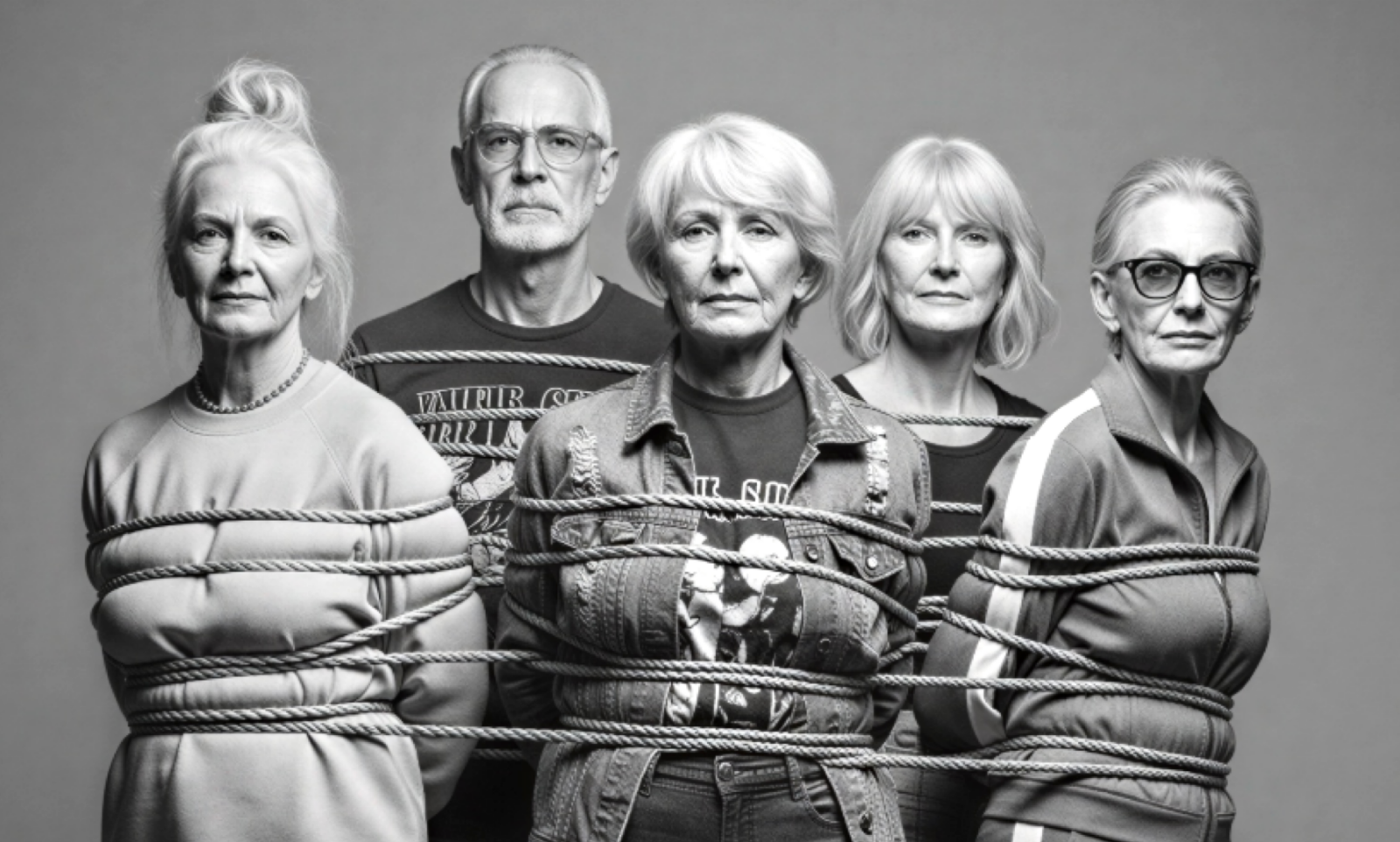
A talent shortage is often framed as an external crisis. As a market failure. As a demographic fate. Yet much of the answer lies within the organization itself. Many experienced employees would stay if work were designed more flexibly. The bottleneck is often self-inflicted. And it can be changed.
The people are there. The room to maneuver isn’t.
Many companies are scrambling for talent. At the same time, they’re losing experienced employees who actually want to stay. The reason? Work models that no longer align with people’s lived realities.
A recent piece by SuperAging News, using the UK as an example, makes this clear. The analysis is sober and direct: it’s not the people who are missing. It’s the structural flexibility.
Linear career paths still shape our systems.
In many organizations, role models, career logic, and working hours are still built around a linear working life. Entry, advancement, peak performance, exit. Very little room in between.
Anyone who wants to adjust their pace, rebalance responsibility, or shift priorities often finds no structural framework to support it. It’s either full throttle or stepping back. Either leadership or loss of relevance.
This logic ignores how diverse and nonlinear working lives have become.
Benefits don’t replace system design.
The article makes it clear that cosmetic measures have little impact. Bonuses, special programs, or symbolic initiatives don’t change the underlying structure. They simply cover up a problem embedded in the system.
What actually works are adaptive work models. More flexible hours, adjustable roles, varying levels of responsibility, and the ability to align pace and workload with changing life circumstances. Work that can flex and evolve instead of forcing people into rigid templates.
Where that flexibility exists, people stay longer. Not out of obligation, but because the conditions actually fit their lives.
Experience is a strategic asset
The effects are measurable. Where these models exist, people stay longer. Institutional knowledge remains accessible. Transitions become more stable. Loyalty doesn’t grow out of obligation, but out of alignment between work and real life.
The real question, then, isn’t whether companies should retain experienced employees. It’s what conditions need to be created so that those who want to stay actually can.
Anyone who keeps focusing solely on recruitment is missing the obvious: the greatest potential often already sits inside the organization.
In an aging workforce, this isn’t just an HR issue. It’s a future-critical question for the entire business model.
We turn demographic reality into action.
This is exactly where Age Bombs comes in. We make visible how assumptions about age shape strategic decisions and where processes unintentionally exclude. Together with organizations, we design work models that create real room to move.
Through keynotes, workshops, and labs, we translate demographic reality into concrete next steps. So work isn’t tied to rigid life-course assumptions, but to competence, motivation, and impact.
New work realities don’t emerge on their own.
If you’re ready to put your work models to the test, take demographic reality seriously, and evolve your decision-making logic so that knowledge and experience stay within your organization, let’s talk.
Book a no-obligation video call with Robert Eysoldt, founder of Age Bombs. Together, we’ll clarify which keynote, lab, or Reality Check will move you forward—and how to design work environments where people actually want to stay.

