

What role does age play in music culture? First findings from our “Smells Like Ageism” survey.
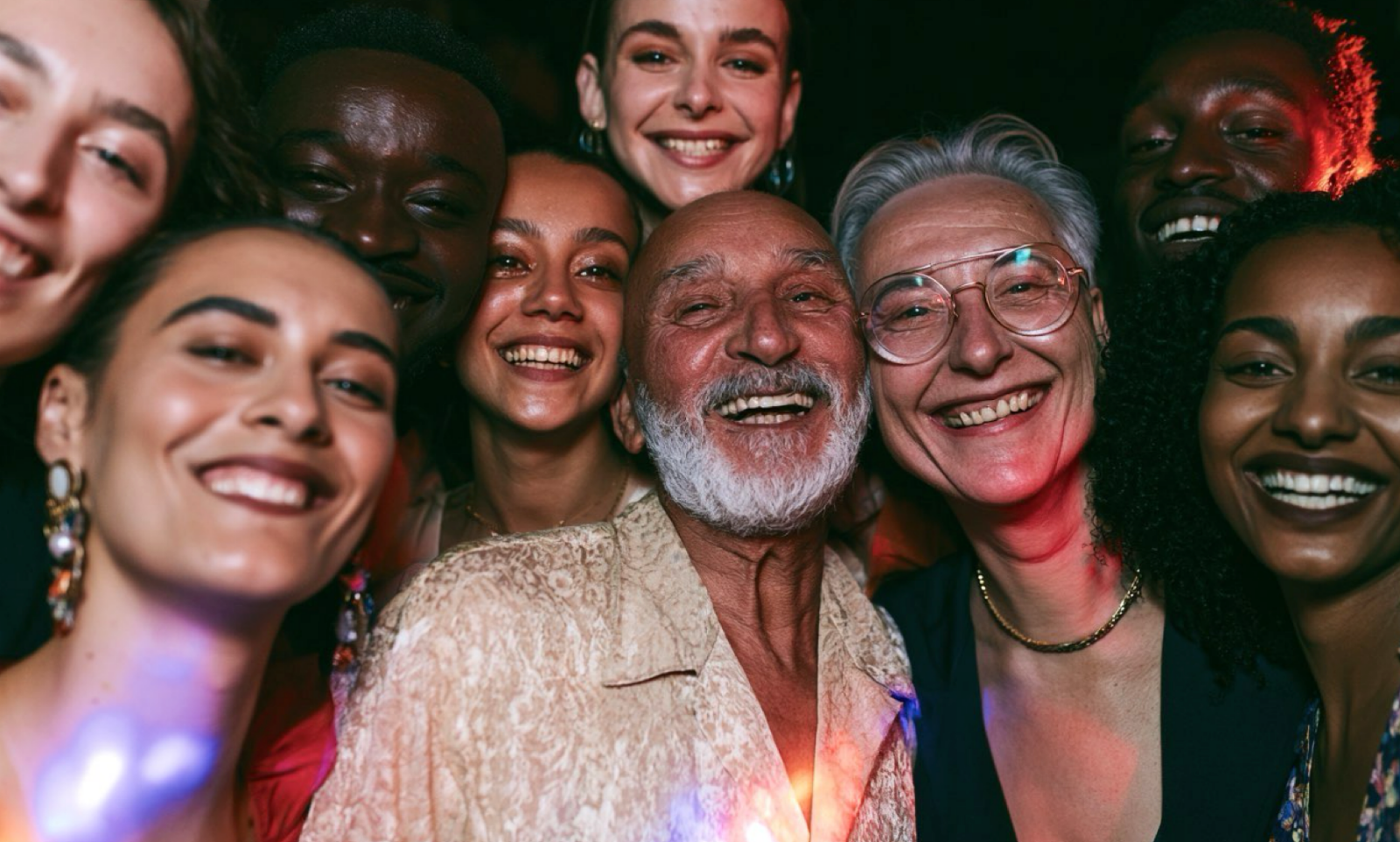
Who feels they belong? Who gets underestimated or gets the side-eye? For our “Smells Like Ageism” survey, we asked people what role age plays in clubs, at concerts, raves, and festivals. The first findings show what brings people together, where they experience discrimination, and what they’d like to see change.
Why this survey?
At Age Bombs, we explore how age shapes the spaces we share. At work, in education, across our cities, and in culture. That includes the places where people come together for music: clubs, concerts, raves, and festivals.
These spaces thrive on different sounds, perspectives, and scenes. But age rarely comes up in the conversation. So, with our “Smells Like Ageism” survey, we asked: Who feels they belong? Where do people experience or witness age-based discrimination? And what do they think needs to change?
Who’s behind the responses?
310 people ages 20 to 84 from 15 countries shared their perspectives on clubs, concerts, raves, and festivals. They included audience members, artists, event organizers, bookers, club staff, and event technicians.
The survey was exploratory and wasn’t representative of music culture as a whole. People in midlife and those connected to club culture, house, and techno were particularly well represented.
People don’t just age out of their music scene.
Participants first looked back at the stages of life when they were most active in their music scenes. Activity peaked in their twenties, but it certainly didn’t stop there. People also reported active periods in their forties, fifties, sixties, and beyond.
One 64-year-old woman described returning to her scene. After years when raising children took up more of her life, dancing and exploring music became more important again. Her story highlights a perspective that’s easy to overlook when planning for audiences: participation doesn’t always follow a straight line. People may step away from their scene for a while and come back later.
Reasons for going out also shifted with age, while music remained important. Experiencing music intensely was among the main motivations across all age groups studied. Dancing mattered less in the older groups, while discovering new art and artists became more important in some. These findings challenge the assumption that curiosity, discovery, and intense musical experiences are mainly for the young.
Music remains a shared motivation across age groups, even as the ways people take part change.
Older participants care less about being around people their own age.
Responses about belonging and fitting in were especially revealing. Participants varied widely in how much they noticed their own age at events.
One clear pattern emerged around the preference for an audience of a similar age: the older participants were, the less it mattered to them to be surrounded mainly by people their own age. Older participants were less concerned with sticking to their own age group.
This challenges a common assumption: that people need a crowd that matches their age. Your birth year isn’t an instruction manual. When it comes to going out, it’s worth looking more closely at interests, needs, and life circumstances than at age alone.
At the same time, many were very aware of their age. Some barely thought about it at events. Others strongly felt it shaped how people saw them. Nearly half said they clearly felt their age influenced how others perceived them.
There was no simple split between “young” and “old.” People of the same age could have very different experiences of belonging. Age alone could only explain so much. The setting, the expectations in that space, and how others respond also appear to matter.
Age can become visible before it leads to exclusion.
45% of participants said their age affected how others perceived them at events in their scene. Being seen differently isn’t discrimination in itself. But the responses also showed that being aware of one’s age could have real consequences.
16% of participants said they had adjusted their appearance, style, or behavior to avoid seeming “too young” or “too old.” Around 25% had even skipped an event because they worried they wouldn’t fit in because of their age.
For event organizers, this is especially relevant: people who stay away because of their age never make it into the audience. That part of the experience stays invisible at the event itself.
One participant described a younger person filming her husband as he danced. She found the situation humiliating. Experiences like this show that belonging is shaped well beyond the door. It also depends on whether people can feel at ease in a space without feeling watched or out of place because of their age.
Nearly 40% had experienced or witnessed age-based discrimination.
For a substantial share of participants, age went beyond perceptions. Nearly 40% said they had experienced age-based discrimination, witnessed it happening to others, or both.
It went beyond the occasional remark. Being underestimated or taken less seriously because of age was especially common. Other experiences included being treated differently at the door or during an event, age-related put-downs and jokes, or feeling the need to justify one’s role and place in the scene.
Professional opportunities also came up in the responses. People reported being passed over for invitations or bookings, or experiencing or witnessing age-related disadvantages in networking, funding, and career opportunities.
One 71-year-old woman described being told at a rave to sit down and have a cup of tea. Her account makes an age stereotype very concrete: someone else thinks they know what she should be doing.
Another participant described poor treatment by bar staff and comments from other guests. Ageism also shows up in everyday encounters at the door, at the bar, or on the dance floor.
Participants saw appearance and gender as factors that could amplify ageism.
Participants also considered how age intersects with other factors. They most often identified body type and appearance as potentially amplifying age-based stereotypes and exclusion. Gender, disability or chronic illness, and financial and social circumstances also featured prominently in their responses.
One 46-year-old woman described experiencing more severe ageism as an older woman. Her experience illustrates how expectations around age and gender can intersect.
These findings reflect participants’ views. They show the connections people perceived, but don’t establish how much specific factors actually cause discrimination. This is an area where future research needs a wider range of perspectives and a more diverse sample.
What’s already working?
The findings also pointed to positive experiences. Many participants felt they belonged, mixed-age crowds were viewed very positively, and intense musical experiences brought people together across age groups.
That offers a useful starting point: belonging seems possible when people of different ages can comfortably share a space without age constantly being called out.
The survey offered less insight into what specific clubs, festivals, concert venues, or teams are already doing well. It didn’t systematically examine which staff behaviors, approaches to communication, or event formats work best.
So the question remains: where are people of different ages already finding a sense of belonging, and what can others learn from those spaces?
Greater age diversity in who’s seen and who gets a say
Communication topped the list of changes participants wanted to see. Around two-thirds supported making people of different ages more visible in event communications.
That puts the spotlight on how an event portrays its audience. Who appears in the photos? Who is being addressed? Who gets the sense, before ever showing up, that they could belong?
Other priorities reached into how events are run. Participants called for greater awareness of ageism among door staff, bartenders, security, and safer-space teams, along with more age-diverse teams planning and running events. More diverse lineups and bookings, plus event times that accommodate different life circumstances, also came up frequently.
The responses focused less on separate events for specific age groups and more on making existing spaces welcoming to a wider mix of people, so they can take part together and feel at home.
Who’s in the photos? Who welcomes the guests? Who decides what’s on offer? These are concrete places to make changes: communication, access, teams, programming, and how events are set up.
Three takeaways
Three key observations emerged from the findings.
People don’t just age out of music culture. Intense musical experiences brought people together across age groups, even as life circumstances and motivations changed.
Age alone couldn’t tell us who felt they belonged. It played very different roles for different people and in different settings.
Ageism showed up in who was seen, welcomed, and taken seriously. Greater age diversity in communication, teams, and decision-making can help reshape these spaces.
The fishbowl at Most Wanted: Music showed how much there was to talk about behind the numbers.
Just how much there is to talk about became clear at Most Wanted: Music in Berlin on November 5, 2026. After Robert Eysoldt and Dr. Tim Kuball presented the findings, audience members joined the fishbowl discussion to share personal experiences and bring in more perspectives.
The discussion also raised questions the survey couldn’t fully answer: Where are people of different ages already finding a sense of belonging? Where do age barriers emerge even when no one explicitly mentions age? And who can make concrete changes in communication, booking, teams, or the way guests are treated?
There’s still a lot to talk about
“Smells Like Ageism” continues. There are more perspectives worth exploring. That’s why we’re keeping the survey open and gathering more experiences. We’re especially keen to hear from younger people and those whose perspectives have been less represented so far.
What role does age play in your music culture?
Share your experiences with us.

