

Shaping the future means reading society differently
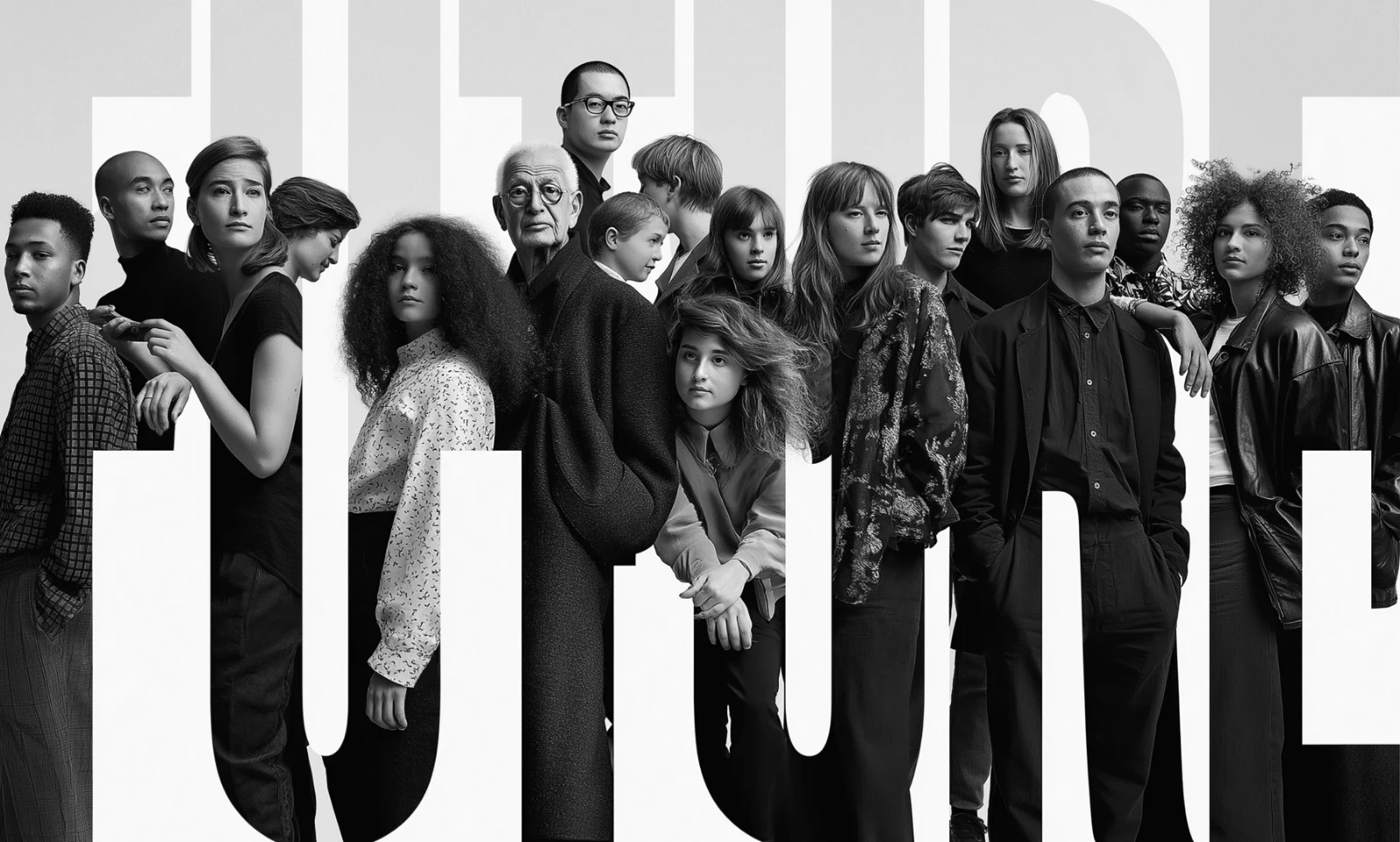
The creative economy wants to shape the future. To do that, it needs a sharper read on the society now taking shape: an older population, longer lives, new ways of working, and more fluid life paths.
A bold ambition
The Creative Economy 2030 Future Report, published by KreativBund, draws on 118 visions of the future and sets out a bold ambition: the creative economy should do more than support transformation. It should actively help shape it. This goes far beyond its traditional role as a service provider. It is about claiming its place as a force that shapes society.
And that brings us to a crucial question:
What kind of society do we actually want to shape?
People are living longer, working differently, continuing to learn, changing roles, and starting over more than once. Life stages that once seemed clearly separated now overlap. Education, paid work, and retirement are less and less likely to follow a fixed sequence.
Bottom line: the old model of education, career, and retirement no longer holds up.
As people live longer and demographic patterns shift, the demands on work, education, technology, culture, urban development, and civic participation are changing too. More people are reaching older age, younger cohorts are shrinking, and the balance between age groups is shifting. This is reshaping labor markets, social safety nets, consumer behavior, mobility, and how responsibility is shared across society. Longer lives call for more room for transitions, fresh starts, and changing ways to contribute.
Yet many social structures and services still run on outdated age logic. They are built around fixed ideas about what someone at a certain age can do, need, want, or still achieve. These assumptions shape educational paths, career decisions, products, public spaces, technologies, and cultural experiences.
A broader role for the creative economy
For a creative economy that wants to take social responsibility seriously, this means a broader role in shaping society.
We need new visions of how people can learn, work, and grow across longer lives. We need spaces that make room for different physical needs, paces, and lived realities. We need technologies that strengthen independence and participation at every stage of life. And we need models of collaboration that allow people to keep bringing their experience, skills, and interests into new contexts.
Seen through this lens, the report’s three core themes take on another dimension: artificial intelligence, cross innovation and collaboration, and the structural conditions shaping creative work.
This perspective also turns the lens on the industry itself. The creative economy creates images, narratives, and experiences that help shape how we see age and the future.
If we talk about AI, we also need to talk about life stages
Artificial intelligence is the most widely discussed topic in the report. The contributions describe AI as a tool, an accelerator, and a possible escape from repetitive tasks. At the same time, they raise concerns about creative roles under threat, shifting value chains, and the future of creative work.
Talking about AI’s impact on society also means talking about access, continued learning, and digital agency at different stages of life.
Who gets to use and help shape new systems? Who are they designed for? What skills do they assume? And what idea of the user is built into them?
Digital skills, curiosity about technology, and the ability to learn do not belong to any one age group. Yet in practice, they are often treated as if they do. Younger people are automatically assumed to be digitally fluent, while older people are seen as hesitant or in need of help. These assumptions find their way into product development, interfaces, communication, and training programs.
The result is technology that sorts people by design.
This is where the creative economy can shift the perspective. It can design applications that account for different experiences and paths to access. It can make complex technologies understandable and tangible. And it can create learning spaces where younger and older people explore together how AI could change their work and their lives.
Digital agency becomes something we need to design for across the whole of life.
Talking about cross innovation means connecting knowledge in new ways
The report identifies cross innovation and collaboration as essential to the creative economy’s future impact. It calls for closer cooperation across industries, disciplines, and different parts of society. Creative expertise should enter innovation processes earlier and build new connections between business, politics, public administration, and civil society.
This also raises the question of who comes together in these processes and what each person is trusted to contribute.
How do we combine deep experience with new knowledge? How do curiosity about technology, sound judgment, speed, contextual understanding, and a willingness to experiment come together? How do we build teams where different lived realities broaden the way a challenge is understood?
Age diversity has an impact when people of different ages come together, their skills count, and they have room to take on different roles. Familiar assumptions that younger people bring fresh thinking and speed while older people bring experience and stability reduce everyone to predictable contributions.
Cross innovation becomes more powerful when these expectations begin to break down. Experience and experimentation can coexist in the same person. People bring new knowledge even when no one previously imagined them in that role. And connections emerge that a purely demographic lens would miss.
Talking about structures means accounting for longer working lives
The report makes clear just how much structural pressure many creative professionals are under. Solo self-employment, unstable incomes, short-term project cycles, bureaucracy, and limited social protection shape large parts of the industry. AI is adding another layer by reshaping roles, budgets, and value chains.
In a society where people live longer, these conditions carry even greater weight.
How can creative work remain sustainable across longer, more fluid working lives? What opportunities exist for continued learning, changing roles, and entering the field later in life? And what models can support people through periods of caregiving, illness, or transition?
Longer working lives need structures that leave room for change.
That includes access to continued learning at every stage of life, social protection that works across changing forms of employment, and funding models that recognize potential beyond linear career paths. It can also open up new ways of working together: age-diverse project teams, tandems, shared responsibilities, and flexible roles that can evolve over the course of a project.
A future-ready creative economy needs conditions that allow people to keep contributing over time and make more than one fresh start.
Taking responsibility means questioning our own ideas about age
The report links the future of the creative economy to social responsibility. Creative ideas are expected to advance democracy, sustainability, urban development, education, and social justice.
That responsibility starts with the images the creative economy puts into the world.
Who gets to embody the future in campaigns and presentations? Who appears in stories about innovation? Who shows up in personas, mood boards, and audience profiles? Who is seen as curious, open to change, attractive, or culturally relevant?
Age-based assumptions are at work in teams, briefs, calls for proposals, funding decisions, casting, and audience models. They help determine who gets seen, who gets an opportunity, and who disappears at the concept stage.
These age narratives cut both ways. Younger people are reduced to inexperience, speed, or trend awareness. Older people are portrayed as established, cautious, affluent, or in need of help. The diversity within every age group disappears.
The creative economy has the tools to change these images. It can portray age as movement. It can show people whose stories are still unfolding. And it can free the future from the idea that certain roles, abilities, and ways of living belong only to certain ages.
This kind of work begins with concrete questions:
Who have we been overlooking? What assumptions about age are built into our briefs? What kinds of life paths do we assume? Who can access what we offer? And what kinds of growth do our designs allow for?
These questions can lead to tangible change in products and services, work processes, public spaces, technologies, cultural programming, and communication.
Rethinking society, together
The Creative Economy 2030 Future Report offers a strong starting point for taking these questions further. It describes an industry that recognizes its power to shape society and wants to claim its place in the transformations ahead.
Now it is time to focus on the society this transformation is meant to serve.
The questions are on the table: What age-based assumptions are built into our designs? Who have we overlooked? And what becomes possible when we rethink society?
If you want to shape the future, this is where to start.
The report draws on 118 visions of the future collected at the 2026 German Creative Economy Summit. The contributions were analyzed with the help of AI and editorially refined by KreativBund.

