

Humanity’s oldest dream has a pitch deck
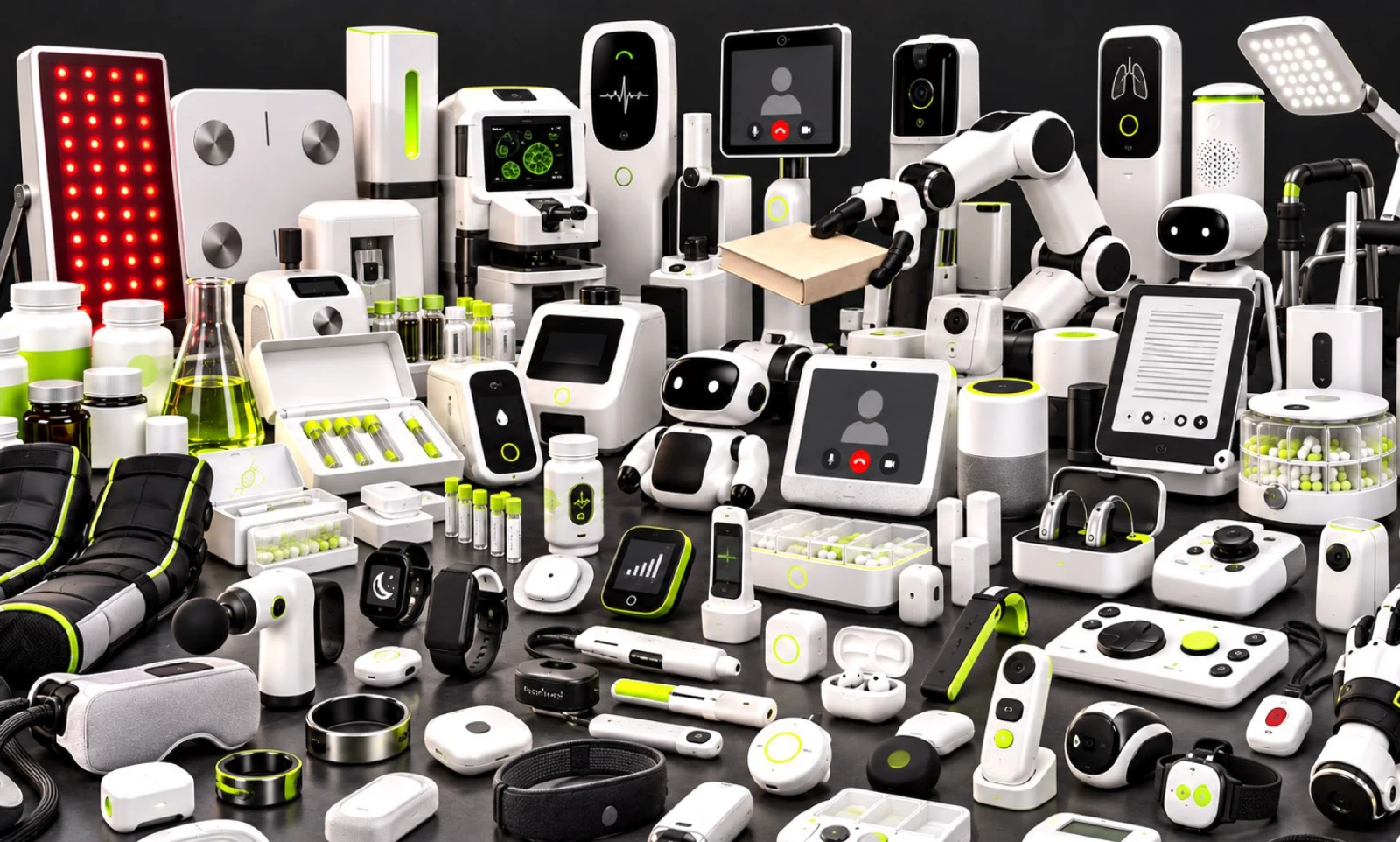
The dream of eternal youth now fills labs, product shelves, and pitch decks. Longevity and AgeTech promise more healthy years and new possibilities for a longer life. But what assumptions about age are built into these offerings, and who gets to decide what we need as we live longer?
The quest for eternal youth has become a market
For thousands of years, people have searched for eternal youth. In gods, fountains of youth, and the Holy Grail.
Today, that dream is being researched in labs, turned into products by startups, and packaged as a business model in pitch decks.
The fountain of youth now sits on your wrist. It tracks sleep and heart rate. Add biomarker tests, supplements, and programs that calculate how well we’re aging. Or how badly.
What interests us most is the view of aging this market sells along with its products. Every idea for a longer life carries assumptions about who people are and who they should be as they live longer. Those assumptions are built into research questions, datasets, user interfaces, business models, and investment decisions.
And those assumptions have consequences. Which problems get attention? Who is seen as vulnerable, fit, or able to pay? Who is trusted to be capable? Who gets a say in development? Who gets access, and when?
The big promise
Longevity is a field of research, a medical hope, an optimization program, a lifestyle, and a business model all at once. The market turns it into things you can buy. Checkups, supplement subscriptions, cryotherapy sessions, IV drips, biomarker tests, and personalized optimization routines.
Sleep gets a score. Food becomes an intervention. Exercise generates data. Bloodwork becomes a dashboard. Biological age becomes a personal performance metric. The promise: more years in good health. Who wouldn’t want that?
What actually works?
What just sounds good?
And who can afford it?
A 2025 article in the journal Aging highlights high prices, inconsistent standards, and limited evidence for some of the treatments offered by longevity clinics.
The prices also tell us who these offerings are designed for. If you have the time and money for regular tests and personalized programs, you can become a customer. If you have neither, you’re still told to do a better job of managing your own aging.
Living longer is celebrated.
Looking older is still suspect.
Back in 2020, researcher Kirsten L. Ellison examined the language of biohacking. In that language, aging becomes faulty code, and an older body becomes an outdated operating system. It sounds futuristic, but carries a familiar old assumption: Aging well means staying productive and looking “youthful” for as long as possible.
A physical change quickly becomes a personal failing. And your health becomes a project that keeps you asking whether you’re doing enough.
Who can afford more healthy years?
“Live healthier” is easy to say. If you work shifts, live in poor housing, do physically demanding work, or wait weeks for a doctor’s appointment, those words probably land differently than they do for someone with a predictable routine, money, and a personalized longevity protocol.
Getting enough sleep, staying active, and eating well all depend on having the conditions that make them possible. While some people are optimizing their biological age, others are just trying to get through the day. Yet everyone gets the same message: Optimize yourself. Responsibility is handed out as if everyone had the same starting point.
If we’re talking about healthy years, we also need to talk about what gives people a fair shot at them. Otherwise, unequal living conditions quickly become something people get blamed for.
AgeTech brings technology into longer lives
While longevity aims to help us stay healthy longer, AgeTech develops products and services for those longer lives. These range from digital services and assistive systems to sensors, connected homes, and robots. AI is enabling more of these systems to act on their own.
Expectations are especially high in long-term care. According to a projection by Germany’s Federal Statistical Office, population aging alone could increase the number of people needing long-term care from around 5 million at the end of 2021 to about 6.8 million by 2055.
What assumptions about age are built into AgeTech?
Our assumptions about age shape the problems we see and the solutions we develop. A review by Ittay Mannheim and colleagues shows how those assumptions influenced the development of digital technologies for older adults. The team examined 60 studies published between 2015 and early 2020.
– 86.7 percent of the applications were developed for health and care.
– Only 11.7 percent focused on social activities and leisure.
– In 71.7 percent of the studies, researchers found outdated language, stereotypical categories, or design decisions based on ageist assumptions.
Across many of these projects, aging was framed around a narrow set of priorities: Reduce risks. Compensate for deficits. Monitor behavior. Reassure family members. When people are seen mainly as a risk, someone who needs help, or a source of worry for their family, their abilities, wishes, and choices can easily get overlooked.
Since the 2010s, researchers have increasingly challenged this narrow view. A 2025 review traces this “critical turn”: greater attention to autonomy, individual differences, and the realities of people’s lives. About time.
Who gets to shape the future?
The Mannheim review also reveals the gap between intention and practice. Of the studies reviewed, 85 percent emphasized the importance of involving older adults throughout the development process. In 46.7 percent, older adults helped design and develop prototypes. Yet only 40 percent involved them from start to finish.
People were consulted early on and later tested the results. They were less involved in the design work in between. That’s where decisions are made about which problem a product should solve and what it needs to do. If you only come in at the testing stage, you can only assess what others have already designed.
Imagine an assistive system: A daughter buys it, a home care provider sets it up, and an insurance company pays for it. The device sits in her father’s home.
The startup sells safety. The daughter wants peace of mind. The care provider hopes for a lighter workload. The father lives with the device and the decisions others have made. And with the knowledge that data about his daily life is being shared.
Many perspectives.
One product.
Different interests.
One home.
If you promise safety, you need to say whose. What gives the daughter peace of mind may give others a say in her father’s daily life. But who decided which problem needed solving? Who decides what gets measured and who can see the data? The device is in his home. He’s the one living with it. He needs a say from the start.
Do we have to wait until someone needs help?
Often, technology only enters the home when someone else sees a risk. And it brings a message with it: You need help now. That can carry a stigma.
If that’s your first encounter with a technology, you’ve had no chance to try it out beforehand and decide for yourself what role it should play in your life. Over the past few years, we’ve come across many solutions developed or marketed specifically for “older adults.” Yet some could be useful much earlier, at different stages of life.
When you start using a technology earlier, out of your own interest, you can explore it, understand it, and set boundaries: What can it do? What does it know about me? What do I want to hand over to it? That builds knowledge and trust. And a sense of ownership: I decide what role this technology plays in my life. If your needs change later, a technology you already know can evolve with you.
From pitch deck to real life
The pitch deck makes promises: more healthy years, greater safety, more control over your own life. Built into those promises are assumptions about what people need as they live longer and what they’re considered capable of.
That gives us four places to start:
Question your assumptions about age first. That’s how you can create products and services that expand people’s choices without diminishing them.
Take people’s different circumstances seriously before telling everyone to manage their aging better. Develop offerings that fit their daily lives and what’s possible for them.
Think about AgeTech before people need specific support. That moves technology beyond a focus on deficits. People can explore it early and decide for themselves what role it should play in their lives..
Give the people who will live with your technology a say from the start in deciding which problem it should solve. If they’re only brought in for testing, they can only assess what others have already designed.
What assumptions about age are you bringing to the table?
Developing products, services, or communications for longer lives? At Age Bombs, we help you uncover the assumptions and stereotypes about age behind your work and examine how they shape what you create, who you reach, and what you make possible.
Through keynotes, workshops, and labs, we broaden perspectives on the lives people actually lead and develop practical approaches for your work. Get in touch. Let’s explore where we can make a difference together.

